
Key Takeaways
- •L-ascorbic acid is the most researched form but also the most unstable.
- •A vitamin C serum that has turned dark orange or brown has oxidized and should be discarded.
- •pH must be below 3.5 for L-ascorbic acid to penetrate the skin effectively.
- •Derivatives like ascorbyl glucoside and THD ascorbate offer better stability with different tradeoffs.
- •Vitamin C provides photoprotective benefits when used under sunscreen in the morning.
- •Concentration above 20% does not increase efficacy and may increase irritation.
The Case for Topical Vitamin C
Vitamin C (ascorbic acid) is a potent antioxidant that plays a critical role in collagen synthesis, photoprotection, and skin brightening. The skin cannot produce its own vitamin C, and oral supplementation has limited impact on skin concentrations because delivery is mediated by saturable transport mechanisms. This makes topical application the most effective route for dermatological benefit.
Pinnell et al. (2001) demonstrated in a pivotal study that topical L-ascorbic acid at concentrations between 15-20% in a formulation with a pH below 3.5 achieved maximal skin penetration and significant increases in tissue vitamin C levels. This study established the benchmark that the entire industry has since attempted to replicate.
The antioxidant function of vitamin C in the skin is particularly important for UV defense. While vitamin C is not a sunscreen and doesn't absorb UV radiation, it neutralizes reactive oxygen species generated by UV exposure, reducing DNA damage, lipid peroxidation, and the inflammatory cascade that leads to photoaging.
The Stability Problem
L-ascorbic acid is inherently unstable. It degrades when exposed to light, heat, air, and water. In aqueous formulations — which most vitamin C serums are — L-ascorbic acid begins oxidizing the moment the bottle is opened. The degradation products include dehydroascorbic acid and eventually erythrulose, which is responsible for the yellow-to-brown color change in oxidized serums.
An oxidized vitamin C serum isn't just ineffective — it can be actively harmful. Dehydroascorbic acid and its breakdown products can generate free radicals, which is the exact opposite of what an antioxidant is supposed to do. If your serum has darkened significantly from its original color, it belongs in the trash, not on your face.
This instability is why formulation science matters far more than the number on the label. A well-formulated 10% L-ascorbic acid serum in an airless pump with stabilizing co-ingredients will outperform a poorly packaged 20% serum that oxidizes within weeks of opening.

Key Formulation Factors
For L-ascorbic acid to penetrate the skin, the formulation pH must be below 3.5 — ideally between 2.5 and 3.0. At higher pH values, the molecule becomes ionized and cannot cross the lipid-rich stratum corneum. This low pH requirement is one reason why vitamin C serums can cause tingling or stinging upon application, especially on compromised skin.
The addition of vitamin E (tocopherol) and ferulic acid dramatically improves both the stability and efficacy of L-ascorbic acid. The landmark Duke University study by Lin et al. (2005) showed that combining 15% L-ascorbic acid with 1% vitamin E and 0.5% ferulic acid doubled photoprotection compared to vitamin C alone and provided four days of protection after a single application.
Packaging is the final critical factor. Look for opaque or dark-tinted bottles with airless pump dispensers. Dropper bottles expose the entire reservoir to air every time you open them, accelerating oxidation. Some brands now use single-dose capsules or powder formats that you mix fresh before each application.
Vitamin C Derivatives: The Alternatives
Given the stability challenges of L-ascorbic acid, the skincare industry has developed numerous derivatives that trade some potency for improved stability. Sodium ascorbyl phosphate (SAP) is water-soluble and stable at neutral pH, with clinical evidence supporting its efficacy for acne and mild brightening at concentrations around 5%.
Ascorbyl glucoside is another stable water-soluble derivative. It requires enzymatic conversion to ascorbic acid in the skin, which limits its potency but makes it extremely well-tolerated. It's a solid choice for sensitive skin types who cannot tolerate the low pH of L-ascorbic acid formulations.
Tetrahexyldecyl ascorbate (THD ascorbate) is an oil-soluble vitamin C derivative that can penetrate the lipid layers of the skin more readily than water-soluble forms. It is stable, non-irritating, and has been shown to stimulate collagen synthesis. However, head-to-head studies comparing it to L-ascorbic acid are limited, making direct efficacy comparisons difficult.

Optimal Concentration
More is not always better. Pinnell's research established that skin tissue saturation occurs at approximately 20% L-ascorbic acid concentration. Increasing the concentration beyond this point does not increase skin levels of vitamin C but does increase the risk of irritation, particularly in those with sensitive or compromised barriers.
For most people, a concentration between 10% and 15% offers an excellent balance of efficacy and tolerability. Products advertising 25% or 30% L-ascorbic acid are likely to cause irritation without additional benefit and may actually contain unstable formulations where the high concentration accelerates degradation.
For vitamin C derivatives, effective concentrations vary by form. SAP is typically effective at 5-10%, ascorbyl glucoside at 2-5%, and THD ascorbate at 1-3%. These numbers reflect the different molecular weights, conversion rates, and bioavailability of each derivative.
When and How to Use Vitamin C
Vitamin C is best applied in the morning after cleansing and before sunscreen. The combination of a topical antioxidant with broad-spectrum sunscreen provides synergistic photoprotection — the sunscreen blocks UV radiation while the vitamin C neutralizes any free radicals that penetrate the sunscreen filter.
Apply a few drops to clean, dry skin and allow it to absorb before applying subsequent products. If you experience stinging or redness, consider buffering with a hydrating serum first, or switching to a derivative form. Persistent irritation is a sign to reduce concentration or frequency.
Vitamin C can be used alongside most other actives. The old myth that it cannot be combined with niacinamide has been thoroughly debunked. However, using L-ascorbic acid at pH 2.5-3.0 simultaneously with retinol can cause excessive irritation for some people — consider using them at different times of day if this is an issue.
Signs Your Vitamin C Has Gone Bad
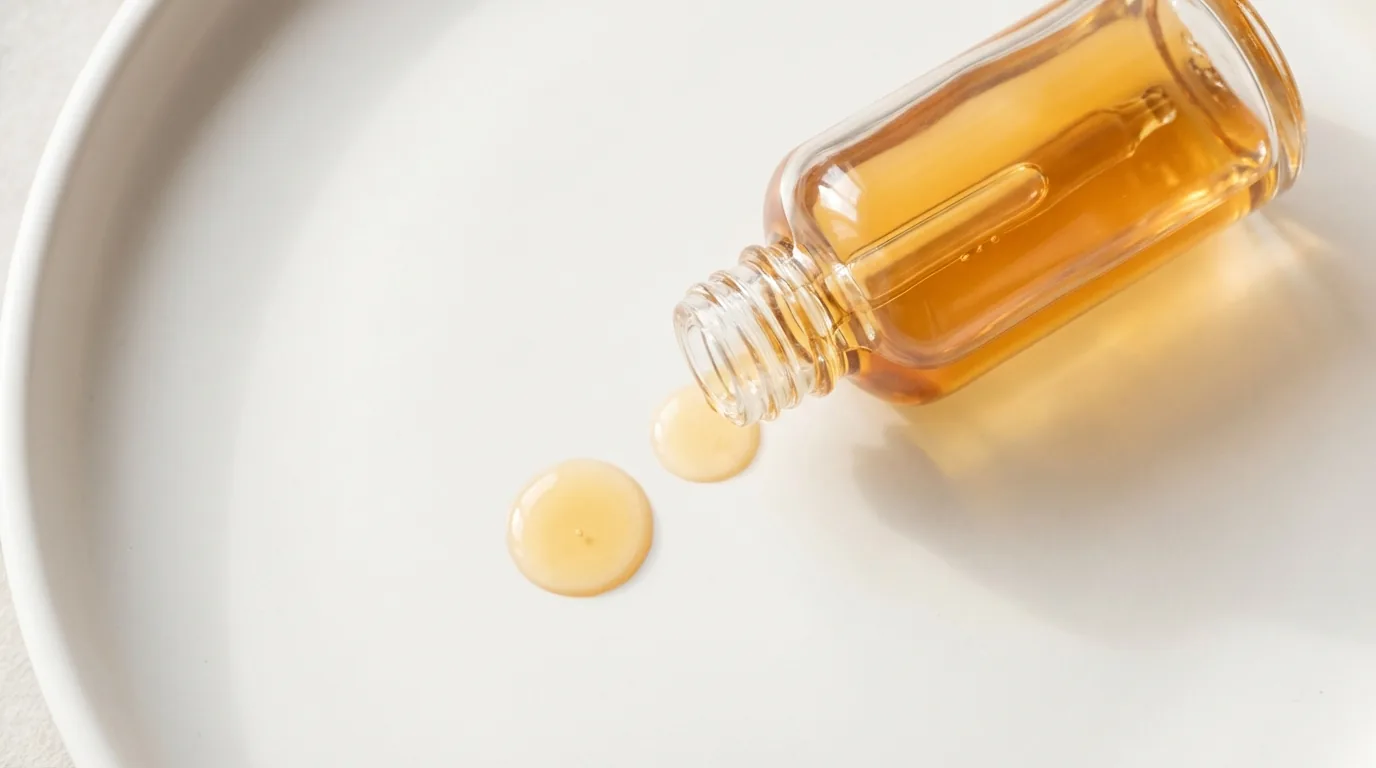
A fresh L-ascorbic acid serum should be clear to very pale yellow. As it oxidizes, it progresses through increasingly darker shades of yellow, then orange, then brown. A light yellow tint is generally acceptable and indicates only minimal oxidation. Once the serum reaches an amber or orange hue, significant degradation has occurred.
Beyond color change, an oxidized vitamin C serum may develop an unusual smell or cause more irritation than when first opened. The texture may also change, becoming thicker or developing sediment. A quality L-ascorbic acid serum should remain stable for approximately 2-3 months after opening if stored properly.
Store your vitamin C serum in a cool, dark place — a bathroom cabinet is generally fine, but a refrigerator is even better. Avoid leaving it in direct sunlight or near heat sources. Some users keep their vitamin C in the fridge to maximize longevity, which is a perfectly reasonable strategy.
References
- Pinnell SR, et al. "Topical L-ascorbic acid: percutaneous absorption studies." Dermatologic Surgery. 2001;27(2):137-142.
- Lin FH, et al. "Ferulic acid stabilizes a solution of vitamins C and E and doubles its photoprotection of skin." Journal of Investigative Dermatology. 2005;125(4):826-832.
- Telang PS. "Vitamin C in dermatology." Indian Dermatology Online Journal. 2013;4(2):143-146.
- Al-Niaimi F, Chiang NYZ. "Topical Vitamin C and the skin: mechanisms of action and clinical applications." The Journal of Clinical and Aesthetic Dermatology. 2017;10(7):14-17.