

Key Takeaways
Stopping LED light therapy does not undo what it achieved, and it does not hold the result indefinitely either. Skin returns to the trajectory it was on before, which means improvements fade at the pace of normal biology rather than disappearing when the device goes in a drawer.
Knowing which changes go first, and how quickly, is worth understanding before buying rather than after. The answer differs by concern, and it follows directly from what each wavelength was doing in the first place.
Do LED Mask Results Last?
Results last for as long as the biological change behind them lasts, which varies from weeks to many months depending on what improved. Nothing about stopping triggers a reversal, and nothing about the device creates a dependency, so the honest framing is a gradual return toward baseline rather than a loss.
Permanence is the wrong expectation to bring to any of it. Light therapy supports processes that continue throughout life, and those processes carry on after sessions stop, just without the additional support. Collagen synthesis still declines with age, sebaceous glands still produce oil, and the barrier still faces the same daily challenges.
Clinical practice treats light-based treatment the same way. American Academy of Dermatology guidance on laser and light treatment for acne notes that most people need a series of treatments rather than one, and that maintenance treatments are often needed once or twice a year afterward, which is the professional version of the same point.
Framing it as maintenance rather than cure makes the commitment clearer. Someone treating a long-term concern such as firmness is taking on an ongoing routine, while someone treating a finite problem such as a run of breakouts may reasonably stop once it resolves.
Why LED Therapy Results Fade
Photobiomodulation increases the rate at which cells already carry out their normal work. Light absorbed in the mitochondria makes more energy available, fibroblasts produce collagen and elastin more actively, and keratinocytes contribute to barrier renewal at a higher rate.
Removing that input returns the cells to their previous rate. The effect is a return to baseline rather than a rebound, which is a meaningful distinction: no withdrawal happens, nothing is being suppressed and then released, and skin does not become worse than it was before the sessions started.
Existing tissue remains, which is the part people find reassuring. Collagen laid down over several months of treatment does not vanish when sessions end, it simply begins declining again at the rate it would have declined anyway, which is why structural improvements are the slowest of all to disappear.
How Long Might LED Results Last After Stopping?
Timelines vary by concern because each one rests on a different mechanism with a different natural lifespan.
| Concern | How long improvement holds | What drives the decline |
|---|---|---|
| Active breakouts | 2 to 6 weeks | Bacterial load rebuilds quickly |
| Barrier comfort | 4 to 8 weeks | Barrier renewal returns to baseline rate |
| Redness and flushing | 1 to 3 months | Vascular response resumes its usual pattern |
| Texture and tone | 3 to 6 months | Cell turnover continues without added support |
| Pigmentation | 3 to 6 months | Melanocyte activity returns to baseline |
| Firmness and fine lines | 6 to 12 months or longer | Collagen declines at its normal age-related rate |
These are reasoned estimates from how each mechanism behaves rather than figures from trials, since studies measure improvement during treatment and rarely follow participants after stopping. Individual variation is wide, and anyone continuing a good routine around sunscreen and moisturizer holds results longer than someone who stops everything at once.
Which LED Therapy Results Fade First
Acne improvement goes first, and the reason is mechanical. Blue light reduces the population of acne-causing bacteria in the follicle rather than changing the conditions that let it flourish, so sebum production continues unchanged and the bacterial load rebuilds over a few weeks. Someone who stopped because their skin had cleared often sees breakouts return within a month or two.
Comfort-related changes follow. Skin that felt less tight and less reactive during treatment reflects a barrier renewing at an elevated rate, and that rate normalizes within weeks of the last session. The change is subtle enough that many people attribute it to weather or stress rather than to stopping.
Structural improvements are the most durable by a wide margin. Collagen and elastin built up over months of consistent sessions remain in the skin, and what resumes is the gradual decline that age and sun exposure drive, so firmness and softened fine lines often hold for the better part of a year before the difference becomes noticeable.
Does Stopping LED Therapy Undo Your Progress?
Progress is not erased by stopping, and this is the question worth answering plainly. Skin does not return to its pre-treatment state on a timer, nor does it overshoot into a worse condition, because nothing was being artificially held in place.
Restarting therefore does not mean beginning again. Someone resuming after three months off still has the collagen their earlier sessions supported, so the new course builds on that rather than replacing it, and the pattern of early texture change followed by slower structural change tends to repeat on a compressed timeline.
Sun exposure is the variable that can genuinely undo progress, and it operates independently of the device. Ultraviolet radiation degrades collagen and drives pigmentation, so months of unprotected exposure after stopping will cost more than the absence of sessions did, which makes sunscreen the thing to maintain if anything is maintained at all.
Taking a Break From an LED Mask
Breaks are normal, and the consequences depend almost entirely on length.
A Week or Two
Nothing measurable changes over a fortnight. Travel, illness, a busy period at work, or simply losing the habit for a couple of weeks has no effect worth worrying about, and resuming the previous schedule is all that is needed.
A Month or More
Acne improvement begins slipping at this point, while structural gains remain intact. Anyone who stopped during a clear phase may notice congestion returning, and the sensible response is resuming the previous protocol rather than increasing it to compensate for lost time.
Restarting After a Gap
Starting again follows the same cautions as starting fresh, which means building up gradually rather than resuming at maximum frequency. Skin tolerance can shift over a long gap, particularly if other products or treatments changed in the meantime, with the device's own instructions on duration and weekly schedule as the reference point.
How to Maintain LED Mask Results
Reduced frequency is the usual approach once someone has reached the result they wanted, on the reasoning that maintaining an improvement asks less of the tissue than producing it did. Dropping from a full schedule to a lighter one, while watching whether the improvement holds, is how most people manage it in practice.
No clinical trial has tested maintenance schedules, which is worth saying directly. Studies run for a fixed treatment period and measure the outcome at the end, so there is no evidence base establishing how little is enough to hold a result, and any specific maintenance figure quoted online is inference rather than data.
Concern type should guide the decision more than any schedule. Ongoing concerns such as firmness and texture rest on continuous processes and justify continuing indefinitely at whatever frequency fits, while a finite problem that has resolved may not need maintenance at all, and the sunscreen and moisturizer around the sessions do more for durability than the sessions alone.
LED Masks Built for Long-Term Use
Everything above points to one buying decision, and it is not about output. A device bought for a concern that resolves, then shelved, then dug out again when something else appears, has to survive three or four changes of purpose over several years, which is a different requirement from performing well across a twelve-week trial.
Two things decide whether that happens. The first is whether sessions fit a life rather than demanding one, since the routine that lapses is almost always the one requiring fifteen stationary minutes at a fixed time. The second is whether the device can be pointed at something new without being replaced, because the concern that justified the purchase at thirty is rarely the concern at thirty-five.
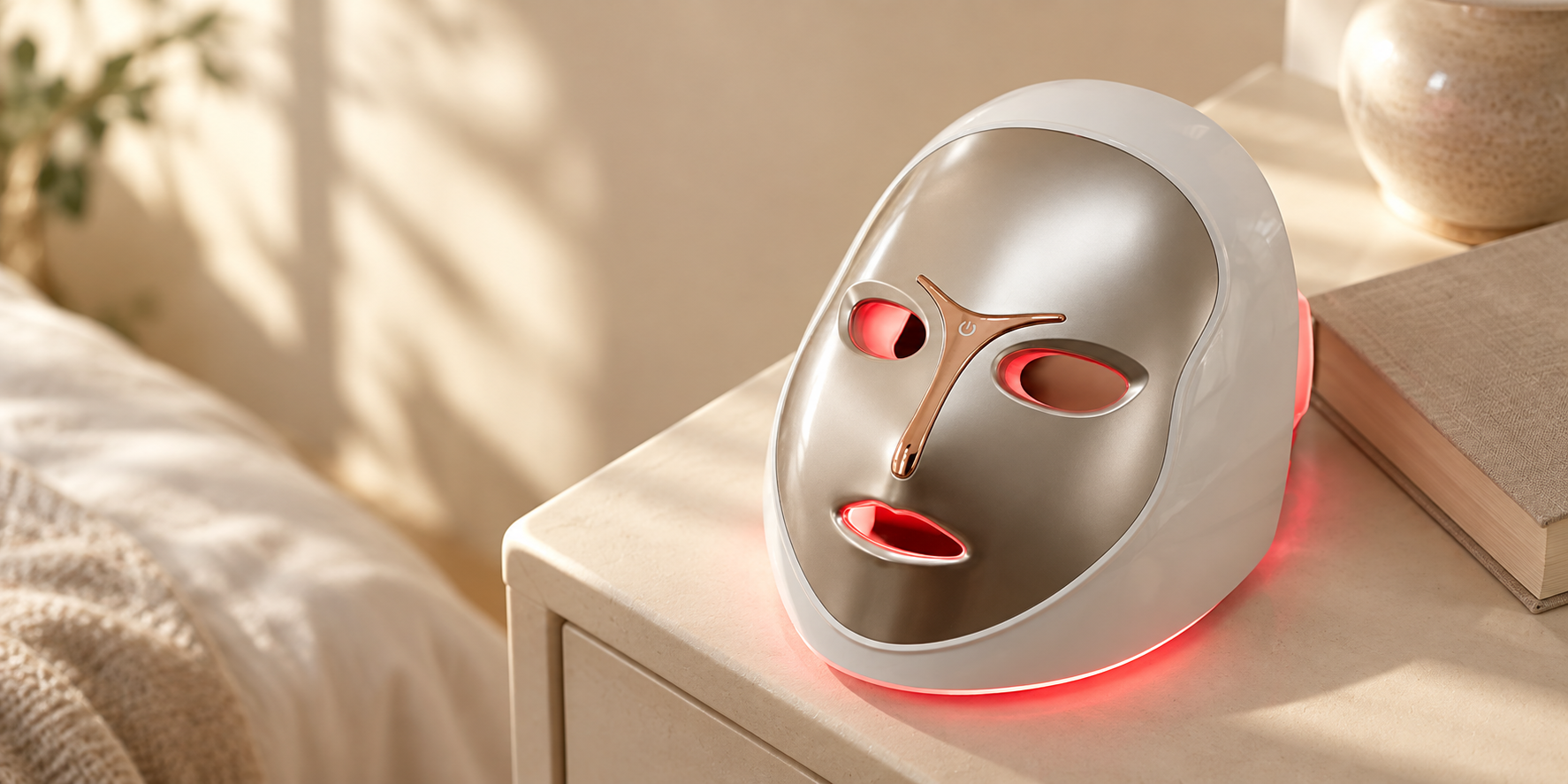
The Artemis LED Mask is built for that second requirement. Treatment settings are mapped per area of the face and saved, so a configuration worked out during a breakout phase can be reassigned later toward structural support, and the record of what was run during the months that produced a result is still there when the question becomes how little is enough to hold it.
Takeaway: What to Expect After Stopping LED Therapy
Stopping an LED mask returns skin to its previous trajectory rather than reversing the gains. Acne improvement fades fastest, within roughly two to six weeks, because bacterial load rebuilds while sebum production never changed. Barrier comfort and redness follow over one to three months, and firmness and fine line improvements hold longest, often six to twelve months or more, because the collagen built during treatment stays in the skin.
Progress is not erased, and restarting is not starting over, since existing collagen remains and a new course builds on it. What genuinely undoes progress is unprotected sun exposure, which operates whether or not anyone is using a device.
Reduced-frequency maintenance is reasonable for ongoing concerns, with the caveat that no trial has established how little is enough. Treating light therapy as a routine rather than a course, and keeping sunscreen and a moisturizer in place either way, is what holds a result in practice.