
Key Takeaways
- •Dermaplaning removes vellus hair and the top layer of dead skin cells using a surgical scalpel.
- •Professional dermaplaning uses a #10 surgical blade; at-home tools use smaller, safer blades.
- •Hair does NOT grow back thicker or darker — this is a persistent myth with no scientific basis.
- •Over-dermaplaning can compromise the skin barrier, leading to sensitivity and breakouts.
- •The treatment is contraindicated for active acne, rosacea, and highly sensitive skin.
- •Proper technique and hygiene are essential to avoid nicks, infection, and irritation.
What Dermaplaning Actually Does
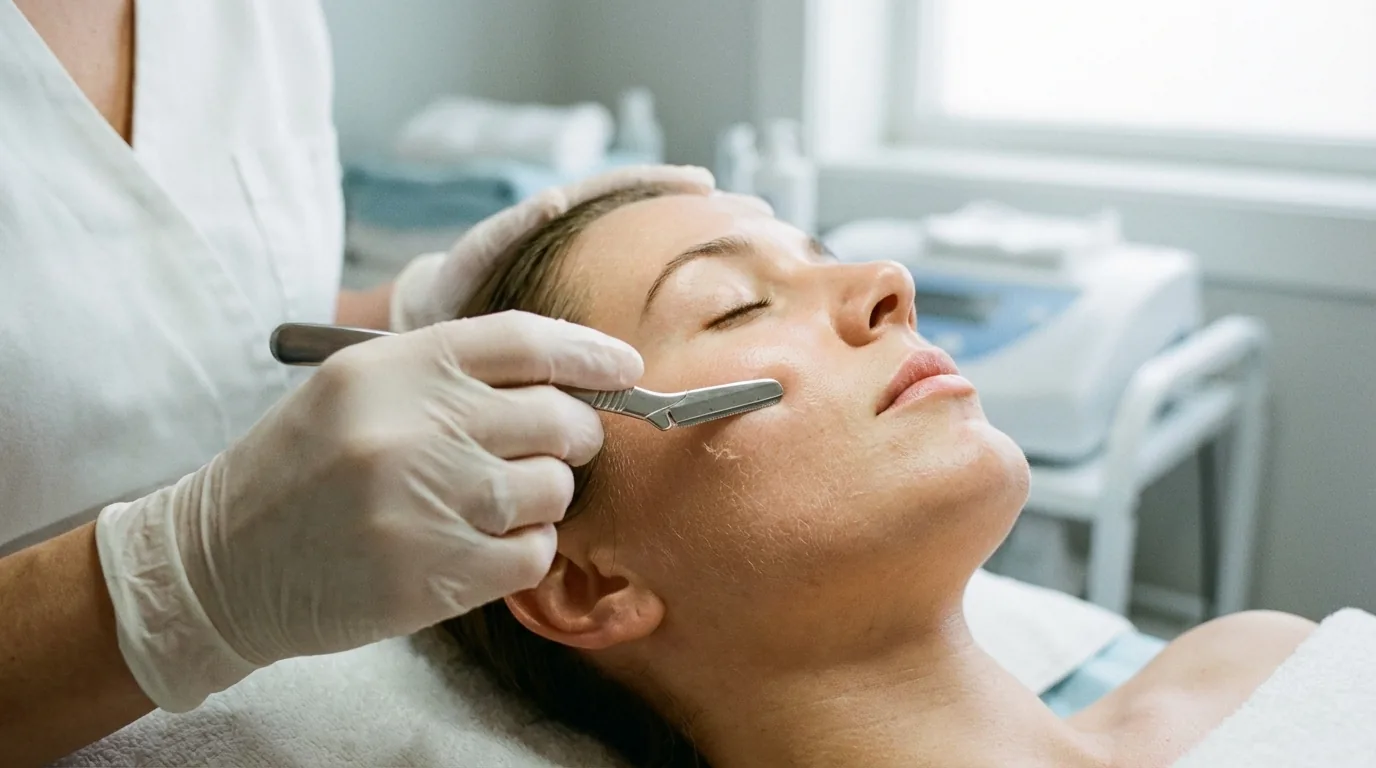
Dermaplaning is a manual exfoliation technique that uses a sterile surgical scalpel held at a 45-degree angle to gently scrape away the outermost layer of dead skin cells (stratum corneum) along with vellus hair — the fine, light-colored peach fuzz that covers most of the face. The result is an immediately smoother skin surface that reflects light more evenly, creating a 'glow' effect, and allows skincare products and makeup to apply more smoothly.
In professional settings, aestheticians use a #10 surgical blade in a handle, performing precise strokes in short, feathering motions across the skin. The blade removes approximately 2-3 weeks' worth of dead cell buildup in a single session. At-home dermaplaning tools use smaller, less aggressive blades — typically single-edge eyebrow razors or purpose-built dermaplaning tools — that are designed to be safer for self-administration but also somewhat less effective.
The treatment is purely mechanical and surface-level. Unlike chemical exfoliation, which dissolves intercellular bonds, or microdermabrasion, which uses abrasion and suction, dermaplaning physically shaves away surface cells and hair. It does not penetrate into the dermis, does not stimulate significant collagen production, and does not treat any concern that exists below the epidermis.
The Hair Growth Myth — Debunked
The single most persistent misconception about dermaplaning is that it causes hair to grow back thicker, darker, or coarser. This is categorically false and has been disproven by multiple studies dating back to the 1920s. A 1928 study published in the Journal of the American Medical Association demonstrated that shaving had no effect on hair thickness, color, or rate of growth.
Vellus hair is structurally different from terminal hair (the thick, pigmented hair on your scalp, eyebrows, etc.). Dermaplaning does not change the hair follicle structure, the hair bulb, or the hormonal signals that determine hair characteristics. What does happen is that the blunt-cut edge of a shaved hair feels slightly rougher to the touch as it grows back, compared to the naturally tapered tip of an uncut hair. This tactile difference is often misinterpreted as the hair being 'thicker.'
The only situation where hair might appear to change characteristics is if hormonal changes coincide with dermaplaning — but the hormonal change, not the dermaplaning, would be responsible. If your vellus hair is transitioning to terminal hair (as can happen with hormonal conditions like PCOS), dermaplaning didn't cause it; you simply noticed it more because you were paying attention to your facial hair.
The Risks Professionals Downplay
While dermaplaning is generally safe when performed correctly, social media and marketing materials often minimize the real risks. The most common complication of at-home dermaplaning is nicks and cuts, which can leave hyperpigmented marks, especially on darker skin tones. Even small cuts on the face heal slowly and can scar if they occur in areas with thinner skin.
Over-dermaplaning is a more insidious risk. The stratum corneum — the layer being removed — exists for a reason: it's your skin's primary barrier against environmental stressors, pathogens, and moisture loss. Removing it too frequently (more often than every 3-4 weeks) can compromise the skin barrier, leading to increased transepidermal water loss (TEWL), heightened sensitivity to products, and reactive breakouts.
Infection risk increases when dermaplaning over active acne. Dragging a blade across papules and pustules can spread bacteria across the skin surface and potentially push infected material deeper into the follicle. Similarly, dermaplaning over flat warts (verruca plana) can spread the virus across the face. If you have active breakouts, any suspicious lesions, or diagnosed rosacea, dermaplaning is not appropriate until these conditions are resolved.
How to Dermaplane Safely at Home
If you choose to dermaplane at home, proper technique and tool selection are critical. Use purpose-designed dermaplaning tools — single-blade razors specifically designed for facial use. Tinkle dermaplaning razors are widely available and provide a gentle introduction to at-home dermaplaning. Always use a fresh blade for each session to minimize infection risk and ensure clean, smooth strokes.
Start with clean, dry skin — no oils, serums, or moisturizers. Hold the skin taut with one hand and use short, light, downward strokes at approximately a 45-degree angle. Work in sections: forehead, cheeks, chin, upper lip. Avoid the nose, eyelids, and any areas with active breakouts. After dermaplaning, apply a gentle hydrating serum — Versed Skin Stroke Brightening Serum is formulated for post-exfoliation application — followed by moisturizer and sunscreen.
Limit at-home dermaplaning to once every 3-4 weeks. More frequent sessions risk compromising the skin barrier without providing additional benefit — the stratum corneum needs time to regenerate between sessions. If you notice increased sensitivity, stinging with your usual products, or reactive breakouts after dermaplaning, extend the interval or discontinue the practice.
Professional vs At-Home: What's the Difference
Professional dermaplaning uses a larger #10 surgical blade that removes more tissue per stroke with greater precision. Aestheticians can see the skin under magnification and adjust pressure and angle based on real-time assessment. The professional setting also allows for proper skin preparation, post-treatment soothing protocols, and integration with other treatments like chemical peels or hydrating masks.
At-home tools are intentionally less aggressive — the blades are smaller, guards may be present, and the angle is more forgiving. This reduces the risk of deep cuts but also limits the amount of exfoliation achieved per session. For most people, at-home dermaplaning provides about 60-70% of the exfoliation of a professional treatment.
The value proposition depends on your goals and budget. Professional dermaplaning costs $75-$150 per session, while at-home tools cost $5-$15 for a pack that lasts months. If you're looking for dramatic pre-event smoothing and glow, a professional session is worth it. For routine maintenance, at-home dermaplaning is a cost-effective option — provided you maintain proper technique and hygiene.
Who Should Avoid Dermaplaning
Dermaplaning is not appropriate for everyone. If you have active inflammatory acne (papules, pustules, cysts), the blade can spread bacteria and worsen breakouts. If you have rosacea, the mechanical irritation can trigger flare-ups. Eczema, psoriasis, and any condition involving compromised skin barrier function are contraindications.
People using prescription retinoids (tretinoin, adapalene) or high-concentration retinol should be cautious about dermaplaning. These ingredients already increase cell turnover and thin the stratum corneum — adding mechanical exfoliation on top can over-strip the skin. If you use retinoids, space your dermaplaning sessions at least 5-7 days from application.
If you have a history of keloid scarring, dermaplaning carries a risk of triggering hypertrophic scarring from even minor nicks. And if you're undergoing radiation therapy or have had recent facial surgery, your skin is too vulnerable for any exfoliation treatment. When in doubt, consult with a dermatologist before adding dermaplaning to your routine.
References
- Trotter MJ, et al. "Shaving and hair growth: a systematic review." British Journal of Dermatology. 2007;156(Suppl 1):1-56.
- Townsend D, et al. "Dermaplaning: evidence-based outcomes and patient selection." Journal of Cosmetic Dermatology. 2020;19(10):2543-2548.
- Andrews MD. "Cryosurgery for common skin conditions." American Family Physician. 2004;69(10):2365-2372.
Related Articles

Microdermabrasion vs Chemical Peel: Which One Does Your Skin Actually Need
April 21, 2025

Can You Over-Exfoliate Your Skin? Signs You Already Have
October 28, 2024

How to Actually Repair Your Skin Barrier
December 3, 2020

Chemical Peels at Home vs. In-Office: An Honest Comparison
June 8, 2020