
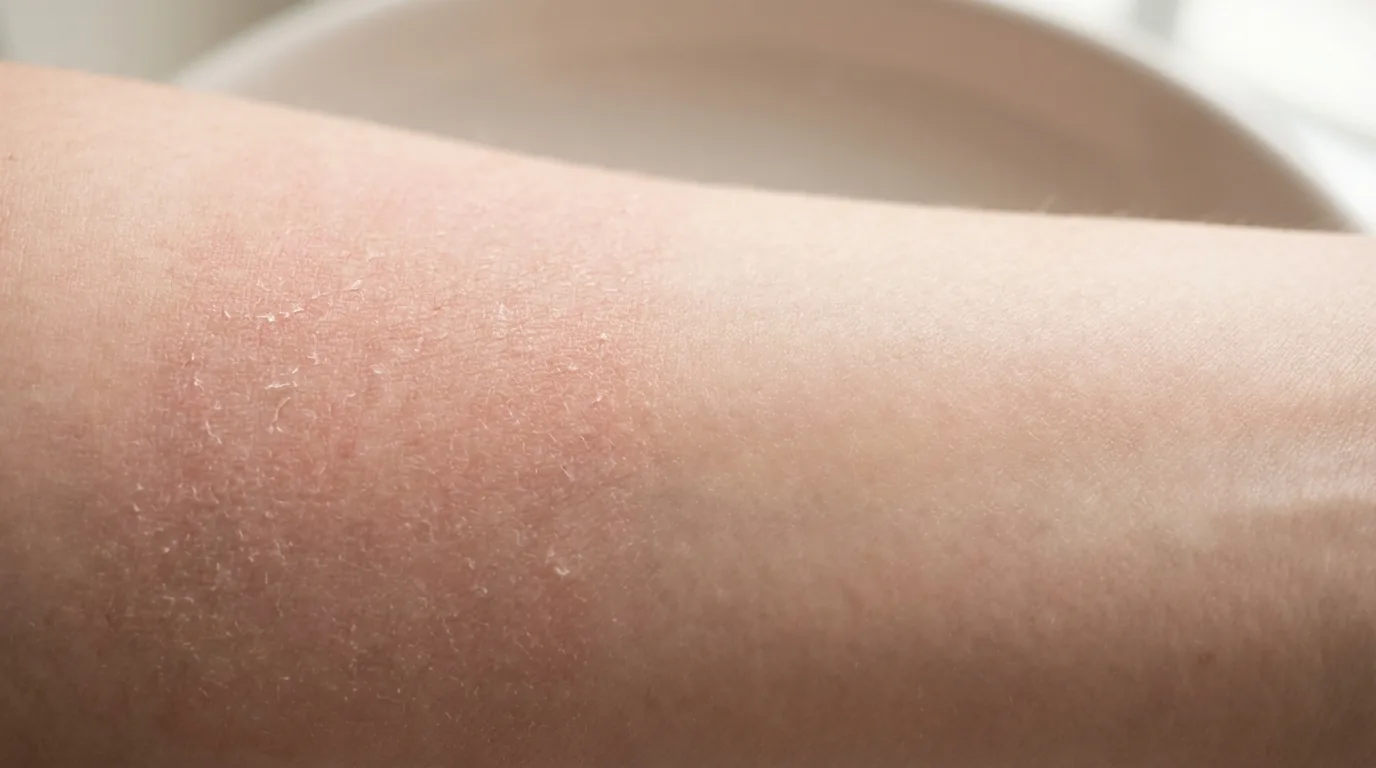
Key Takeaways
- •Psoriasis is an autoimmune condition; eczema is driven by barrier dysfunction and Th2 immune response.
- •Psoriasis produces thick, silvery scales on well-defined plaques; eczema produces thin, weepy patches.
- •Psoriasis favors extensor surfaces (elbows, knees); eczema favors flexural areas (inner elbows, behind knees).
- •Psoriasis is associated with systemic inflammation and increased cardiovascular risk.
- •Both conditions have highly effective biologic treatments available for moderate-to-severe disease.
- •Psoriasis cannot be cured but can be managed to near-complete clearance with modern treatments.
Psoriasis: An Autoimmune Disease
Psoriasis is a chronic autoimmune disease affecting approximately 3% of the global population — roughly 125 million people worldwide. Unlike eczema, which is primarily a barrier and Th2 immune disorder, psoriasis is driven by an overactive Th1/Th17 immune response that dramatically accelerates the skin cell lifecycle. Normal skin cells take about 28 days to mature and shed; in psoriatic skin, this process occurs in just 3–4 days.
This rapid turnover creates the hallmark feature of psoriasis: thick, silvery-white scales overlying well-defined, raised, erythematous (red) plaques. The scales are actually layers of immature skin cells that have piled up faster than they can be shed. When these scales are removed, pinpoint bleeding occurs — a diagnostic sign known as the Auspitz sign.
Psoriasis is fundamentally a systemic inflammatory condition, not just a skin disease. The same inflammatory pathways that drive skin manifestations also contribute to psoriatic arthritis (affecting up to 30% of psoriasis patients), cardiovascular disease, metabolic syndrome, inflammatory bowel disease, and depression. Managing psoriasis effectively means addressing not just the visible skin lesions but the underlying systemic inflammation.
How to Distinguish Psoriasis From Eczema
While both conditions produce red, inflamed, scaly skin, several clinical features help distinguish them. Psoriasis plaques are well-demarcated with sharp, defined borders — you can clearly see where the affected skin ends and normal skin begins. Eczema patches have poorly defined, blurred edges that fade gradually into surrounding skin.
The quality of the scale is different. Psoriasis produces thick, silvery-white, micaceous (mica-like) scales that can be peeled off in sheets. Eczema produces thinner, finer scales, and in acute flares, the skin may be weeping, oozing, or crusted rather than dry and scaly. Eczema is intensely itchy; psoriasis can itch but is often described more as burning or stinging.
Distribution provides important diagnostic clues. Psoriasis favors extensor surfaces — the outside of the elbows, the front of the knees, and the lower back (sacrum). It commonly affects the scalp, nails, and gluteal cleft. Eczema favors flexural surfaces — the inner elbows, behind the knees, the wrists, and the neck. In adults, eczema often affects the hands and face. Of course, both conditions can occur anywhere, and some patients have both simultaneously.
Types of Psoriasis
Plaque psoriasis is the most common form, accounting for about 80-90% of cases. It presents as the classic raised, red plaques with silvery scales, typically on the scalp, elbows, knees, and lower back. Plaques can range from a few small patches to extensive coverage of large body surface areas.
Guttate psoriasis appears as small (0.5–1.5cm), drop-shaped, salmon-pink papules scattered across the trunk and extremities. It's often triggered by streptococcal throat infections and is more common in children and young adults. Guttate psoriasis can resolve spontaneously but may evolve into chronic plaque psoriasis.
Other forms include inverse psoriasis (smooth, shiny red patches in skin folds), pustular psoriasis (sterile pustules on erythematous skin), and erythrodermic psoriasis (widespread redness covering most of the body — a medical emergency). Nail psoriasis, which causes pitting, discoloration, onycholysis (nail separation), and subungual hyperkeratosis, affects up to 50% of psoriasis patients and can be the most treatment-resistant manifestation.
What Triggers Psoriasis Flares
Psoriasis flares can be triggered by a variety of factors. Infections are one of the most common triggers — streptococcal pharyngitis is particularly associated with guttate psoriasis, and any systemic infection can trigger a flare of existing plaque psoriasis. Stress is another major trigger, with studies showing a clear correlation between psychological stress and disease severity.
Certain medications can induce or worsen psoriasis. Beta-blockers, lithium, antimalarials, and rapid withdrawal of systemic corticosteroids are well-documented triggers. NSAIDs, ACE inhibitors, and terbinafine have also been implicated. Always inform your prescribing physician about your psoriasis when starting any new medication.
The Koebner phenomenon — the development of new psoriatic lesions at sites of skin injury — is characteristic of psoriasis and not typical of eczema. Cuts, scrapes, sunburns, tattoos, and even surgical incisions can trigger new plaques at the injury site. This phenomenon is one reason why aggressive physical treatments should be approached cautiously in psoriasis patients.
Topical and Over-the-Counter Treatments
For mild psoriasis (affecting less than 3% of body surface area), topical treatments are often sufficient. Topical corticosteroids remain the most commonly prescribed first-line treatment, with potency matched to body site and plaque thickness. Unlike eczema, where mild steroids are preferred, psoriasis often requires mid to high-potency steroids to penetrate thick plaques.
Vitamin D analogues (calcipotriene/calcipotriol) are another cornerstone of topical psoriasis therapy. They slow keratinocyte proliferation and promote normal differentiation — directly addressing the fundamental pathology of accelerated skin cell turnover. Combination preparations containing both calcipotriene and a potent corticosteroid (betamethasone dipropionate) are more effective than either agent alone.
For scalp psoriasis, medicated shampoos can provide significant relief. Neutrogena T/Gel Therapeutic Shampoo contains coal tar, which has been used for psoriasis treatment for over a century and works by slowing skin cell proliferation and reducing inflammation, scaling, and itch. For body plaques, CeraVe Psoriasis Moisturizing Cream combines 2% salicylic acid with ceramides to provide keratolytic action while supporting the skin barrier. Dermarest Psoriasis Medicated Shampoo offers a zinc-based formula for those who prefer an alternative to coal tar.
Systemic and Biologic Therapies
For moderate-to-severe psoriasis (affecting more than 10% of body surface area or significantly impacting quality of life), systemic treatments offer transformative results. Traditional systemic agents include methotrexate, cyclosporine, and acitretin. While effective, these medications require regular blood monitoring and carry risks of organ toxicity with long-term use.
Biologic medications have revolutionized psoriasis treatment. TNF-alpha inhibitors (adalimumab, etanercept, infliximab) were the first biologics approved for psoriasis. IL-17 inhibitors (secukinumab, ixekizumab, brodalumab) target a key cytokine in the psoriatic inflammatory cascade and offer PASI 90 response rates of 60–70%. IL-23 inhibitors (guselkumab, risankizumab, tildrakizumab) target the upstream regulatory cytokine and offer sustained clearance with less frequent dosing.
The newest class — IL-23 p19 inhibitors — offer some of the highest clearance rates with the most convenient dosing schedules. Risankizumab, for example, achieves PASI 90 in approximately 75% of patients with dosing every 12 weeks after the initial loading period. These biologics have fundamentally changed the treatment paradigm: near-complete skin clearance is now a realistic goal for most psoriasis patients rather than an exceptional outcome.
Living With Psoriasis: Beyond the Skin
The psychological impact of psoriasis is profound and often underestimated by clinicians. Studies consistently show that the impact of psoriasis on quality of life is comparable to that of cancer, heart disease, and diabetes. Social stigma, self-consciousness about visible plaques, and the chronic nature of the disease contribute to high rates of anxiety (up to 48%) and depression (up to 62%) in psoriasis patients.
The systemic inflammation associated with psoriasis increases cardiovascular risk — patients with severe psoriasis have a significantly higher incidence of myocardial infarction, stroke, and cardiovascular mortality compared to the general population. This makes cardiovascular risk factor management (blood pressure, cholesterol, blood sugar, weight, smoking cessation) an important component of comprehensive psoriasis care.
Joint involvement (psoriatic arthritis) should be actively screened for at every visit, as early treatment prevents irreversible joint damage. Symptoms include joint pain, stiffness (especially morning stiffness), swelling, and enthesitis (pain where tendons attach to bone, commonly the Achilles tendon and plantar fascia). If you have psoriasis and develop any joint symptoms, report them to your dermatologist immediately — referral to a rheumatologist for early treatment can preserve joint function.
References
- Parisi R, et al. "Global epidemiology of psoriasis: a systematic review of incidence and prevalence." Journal of Investigative Dermatology. 2013;133(2):377-385.
- Armstrong AW, Read C. "Pathophysiology, clinical presentation, and treatment of psoriasis: a review." JAMA. 2020;323(19):1945-1960.
- Gelfand JM, et al. "Risk of myocardial infarction in patients with psoriasis." JAMA. 2006;296(14):1735-1741.
- Gordon KB, et al. "Efficacy and safety of risankizumab in moderate-to-severe plaque psoriasis." The Lancet. 2018;392(10148):650-661.


