
Key Takeaways
- •Hyperpigmentation is a broad term covering many types of excess melanin production.
- •Age spots (solar lentigines) are specifically caused by cumulative UV damage.
- •Post-inflammatory hyperpigmentation (PIH) is triggered by injury or inflammation.
- •Melasma is hormonally driven and requires a different treatment approach.
- •All types benefit from sun protection, but targeted treatments differ.
- •Professional treatments can accelerate fading significantly.
Defining the Terms
Hyperpigmentation is an umbrella term that describes any area of skin that produces or contains excess melanin, resulting in patches or spots that appear darker than the surrounding skin. It encompasses multiple distinct conditions — each with different causes, triggers, and optimal treatments. Using the generic term 'hyperpigmentation' without specifying the type is like saying you have 'a rash' — it's descriptively accurate but not diagnostically useful.
Age spots — properly called solar lentigines — are a specific type of hyperpigmentation caused by cumulative ultraviolet radiation damage. They're flat, well-defined, typically oval or round, and range from light tan to dark brown. They appear almost exclusively on chronically sun-exposed areas: the face, hands, forearms, upper chest, and shoulders. Despite the name, they're not caused by age itself — they're caused by sun damage that accumulates over time.
Post-inflammatory hyperpigmentation (PIH) is darkening that follows skin injury or inflammation — acne breakouts, eczema flares, chemical burns, aggressive treatments, or physical trauma. Unlike solar lentigines, PIH can occur anywhere on the body and at any age. It's particularly common and persistent in individuals with darker skin tones (Fitzpatrick types III-VI) because their melanocytes are more reactive to inflammatory stimuli.
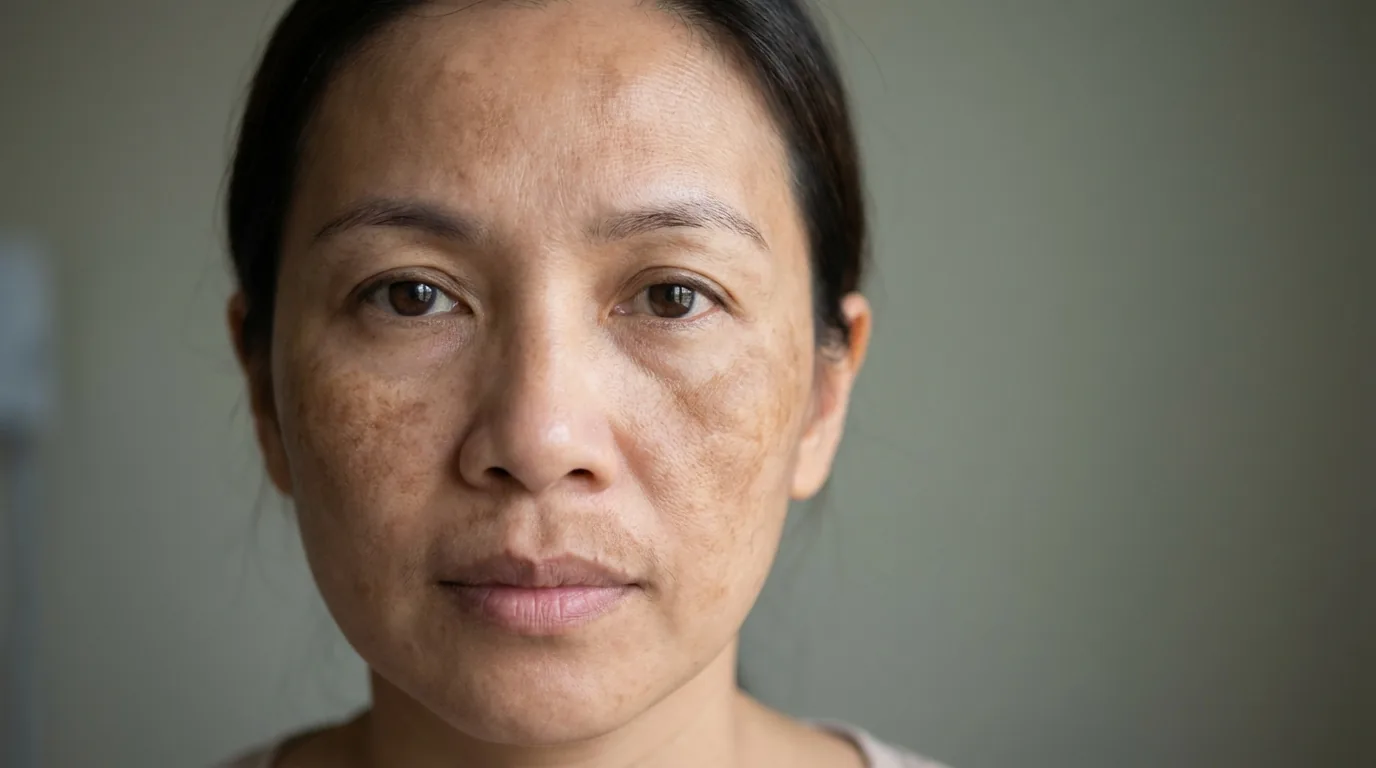
Melasma is a hormonally influenced form of hyperpigmentation that produces larger, more diffuse patches — typically on the forehead, cheeks, upper lip, and bridge of the nose. It's far more common in women (especially during pregnancy, while taking oral contraceptives, or during hormone replacement therapy) and is notoriously difficult to treat because it involves changes in melanocyte behavior rather than simple melanin accumulation.
How to Tell Them Apart
Solar lentigines are typically discrete, well-bordered spots ranging from a few millimeters to several centimeters in diameter. They're most common after age 40 and correlate strongly with cumulative sun exposure history. They don't change with hormonal fluctuations, don't respond to anti-inflammatory treatments, and remain stable in size unless additional UV exposure causes them to darken or merge with neighboring spots.
PIH presents as flat patches of discoloration that correspond to the location and shape of a preceding inflammatory event. If a breakout or skin injury occurred in that exact location weeks or months prior, the dark mark is almost certainly PIH. These marks range from pink-red (in lighter skin tones) to dark brown or slate-gray (in darker skin tones) and gradually fade on their own over months to years, though treatment can accelerate this significantly.
Melasma has a characteristic distribution pattern — symmetrical patches on the cheeks, forehead, upper lip, and chin in what dermatologists call the centrofacial, malar, and mandibular patterns. It tends to worsen with sun exposure and heat, fluctuate with hormonal changes, and resist treatments that work well for other types of hyperpigmentation. A Wood's lamp examination can help distinguish epidermal melasma (which appears darker under UV light) from dermal melasma (which does not), with implications for treatment response.
In practice, many people have overlapping types — sun spots with superimposed PIH, or melasma with concurrent solar lentigines. A dermatologist can differentiate these through clinical examination, dermoscopy, and Wood's lamp assessment, which is important because the optimal treatment approach differs for each type.
Treating Age Spots (Solar Lentigines)
Topical treatments for solar lentigines focus on inhibiting tyrosinase (the key enzyme in melanin production) and accelerating cell turnover to shed pigmented cells. Hydroquinone (2-4%) remains the most effective topical lightening agent, typically producing visible improvement in 4-8 weeks. However, concerns about long-term safety and side effects (ochronosis with prolonged use) have led many practitioners to favor alternative agents.
The La Roche-Posay Mela-D pigment control serum combines glycolic acid with LHA and kojic acid to target existing dark spots while gently exfoliating the surface. The Ordinary Alpha Arbutin 2% + HA is an excellent budget option — alpha arbutin is a gentle tyrosinase inhibitor that gradually reduces melanin production with minimal irritation risk.
Retinoids accelerate the shedding of pigmented surface cells and can be combined with tyrosinase inhibitors for enhanced effect. The combination of a retinoid, vitamin C, and a tyrosinase inhibitor addresses melanin production, melanin transfer, and cell turnover simultaneously — a comprehensive approach that produces better results than any single agent alone.
Professional treatments for stubborn solar lentigines include cryotherapy (liquid nitrogen), laser treatments (Q-switched Nd:YAG, alexandrite, or picosecond lasers), and IPL. These in-office procedures can eliminate individual spots in 1-3 sessions, though they carry a small risk of post-treatment hyperpigmentation, particularly in darker skin tones.
Treating Post-Inflammatory Hyperpigmentation
PIH treatment centers on two principles: suppressing ongoing melanin production and accelerating the turnover of pigmented cells. The most important first step is controlling the underlying inflammation — if acne or eczema is still active, treating the dark marks without addressing the source of inflammation is futile, as new marks will continue to form.
Niacinamide (4-5%) is particularly effective for PIH because it inhibits melanosome transfer — the process by which melanin granules move from melanocytes to keratinocytes. This is a different mechanism than tyrosinase inhibition, making niacinamide an excellent complement to ingredients like alpha arbutin, vitamin C, or azelaic acid.
Azelaic acid (15-20%) is especially valuable for PIH because it selectively targets abnormally active melanocytes while leaving normally functioning melanocytes alone. This selectivity makes it safer for long-term use than hydroquinone and particularly well-suited for treating PIH in darker skin tones, where the risk of rebound hyperpigmentation is a significant concern.
Chemical exfoliation with AHAs (glycolic acid, mandelic acid) accelerates the shedding of pigmented surface cells. Mandelic acid is often preferred for PIH treatment in darker skin tones because its larger molecular size results in slower, more even penetration with less risk of irritation-induced worsening.
The Importance of Sun Protection
Sun protection is the universal foundation of any hyperpigmentation treatment plan, regardless of type. UV exposure activates melanocytes, increasing melanin production and worsening all forms of hyperpigmentation. Without consistent, diligent sun protection, even the most effective treatments will produce disappointing results because UV exposure constantly stimulates new pigment production.
Broad-spectrum SPF 30+ is the minimum recommendation, with SPF 50 preferred for those actively treating pigmentation concerns. Mineral sunscreens containing zinc oxide and titanium dioxide provide broad-spectrum protection and begin working immediately upon application — an advantage over chemical sunscreens that require 15-20 minutes for activation.
For melasma specifically, visible light and heat can also trigger pigmentation, which is why tinted mineral sunscreens containing iron oxides are recommended. Iron oxides block visible light wavelengths that standard UV filters miss. Hats, shade-seeking behavior, and avoiding peak sun hours provide additional protection.
Consistency is key. A single day of unprotected sun exposure can undo weeks of treatment progress for any type of hyperpigmentation. Building sun protection into an automatic daily habit — applying sunscreen as part of your morning routine regardless of planned activities — is the most impactful change you can make for managing pigmentation concerns.
References
- Handel AC, et al. "Melasma: a clinical and epidemiological review." Anais Brasileiros de Dermatologia. 2014;89(5):771-782.
- Davis EC, Callender VD. "Postinflammatory hyperpigmentation: a review of the epidemiology, clinical features, and treatment options in skin of color." Journal of Clinical and Aesthetic Dermatology. 2010;3(7):20-31.
- Ortonne JP, Bissett DL. "Latest insights into skin hyperpigmentation." Journal of Investigative Dermatology Symposium Proceedings. 2008;13(1):10-14.
Related Articles

Hyperpigmentation: The Difference Between PIE and PIH
August 11, 2021

Sun Damage: How to Fade It and Stop It Getting Worse
March 3, 2025

Vitamin C Serums: Why Stability Matters More Than Concentration
November 30, 2021

Melasma: Why It's One of the Hardest Skin Conditions to Treat
April 14, 2025