
Key Takeaways
- •Facial massage can genuinely reduce temporary puffiness through lymphatic drainage.
- •The depuffing effect is temporary — typically lasting 30 minutes to a few hours.
- •There is limited evidence that consistent facial massage may slightly improve skin elasticity over time.
- •Anti-aging claims are largely unsupported by robust clinical studies.
- •Proper directional technique is more important than the specific tool or product used.
- •Facial massage is unlikely to cause harm when performed gently and is a valid self-care practice.
The Lymphatic System and Facial Puffiness
To understand whether facial massage can depuff your face, you need to understand the lymphatic system. The lymphatic system is a network of vessels that runs parallel to your blood vessels and is responsible for draining excess fluid, waste products, and immune cells from tissues. Unlike the cardiovascular system, the lymphatic system has no central pump — it relies on muscle movement, breathing, and external manipulation to keep fluid moving.
The face has a rich lymphatic network that drains into lymph nodes located in front of the ears, behind the ears, under the jaw, and along the sides of the neck. When this system becomes sluggish — due to sleep position, gravity, sodium intake, alcohol, allergies, or simply individual anatomy — fluid accumulates in the facial tissues, creating the 'puffy' appearance many people experience, particularly in the morning.
Gentle directional massage along lymphatic pathways can encourage this stagnant fluid to drain toward the lymph nodes for processing. This is not pseudoscience — manual lymphatic drainage (MLD) is an established medical therapy used after surgery, for lymphedema management, and in rehabilitation medicine. The facial version simply applies the same principles on a smaller, gentler scale.
What the Research Actually Shows
A 2018 study published in the journal Complementary Therapies in Medicine examined the effects of facial massage on skin blood flow and found a significant increase in local microcirculation that persisted for approximately 10 minutes after a 5-minute massage. Another study in the Journal of the Japanese Cosmetic Science Society demonstrated temporary improvement in skin elasticity measurements after facial massage, though the effect diminished within hours.
A 2017 study in PLoS One found that a facial massage device used for 8 weeks produced measurable improvements in skin elasticity compared to baseline, suggesting that consistent, long-term facial massage may produce cumulative benefits. However, the study had a small sample size and lacked a proper control group, so the results should be interpreted cautiously.
What the evidence does NOT support is that facial massage can permanently lift sagging skin, eliminate wrinkles, or produce results comparable to professional treatments like microneedling, laser resurfacing, or injectables. The structural changes that underlie facial aging — bone resorption, fat pad descent, collagen degradation — are not meaningfully affected by surface massage.
Tools vs Hands: Does It Matter
Facial massage can be performed with your fingers, gua sha stones, jade rollers, metal rollers, ice globes, or electronic massage devices. The question of which is most effective is less about the tool and more about consistent technique and appropriate pressure. Your hands have the advantage of providing tactile feedback — you can feel tension, congestion, and changes in tissue texture that tools cannot detect.
Rolling tools like the Mount Lai Depuffing Facial Roller offer the advantage of temperature retention — stored in the refrigerator, they provide a cooling effect that causes temporary vasoconstriction, which can enhance the depuffing effect. Ice globes and chilled metal tools have the same benefit. The rolling motion is also less likely to inadvertently tug the skin than fingertip massage.
The key with any tool is providing adequate slip to prevent dragging the skin. Apply a facial oil, serum, or moisturizer with a slippery texture before massage. Tatcha The Silk Serum is formulated with a silky texture that provides excellent slip for massage application. Whatever product you choose, the surface should glide smoothly without requiring pressure that could stretch or pull the skin.
Effective Facial Massage Technique
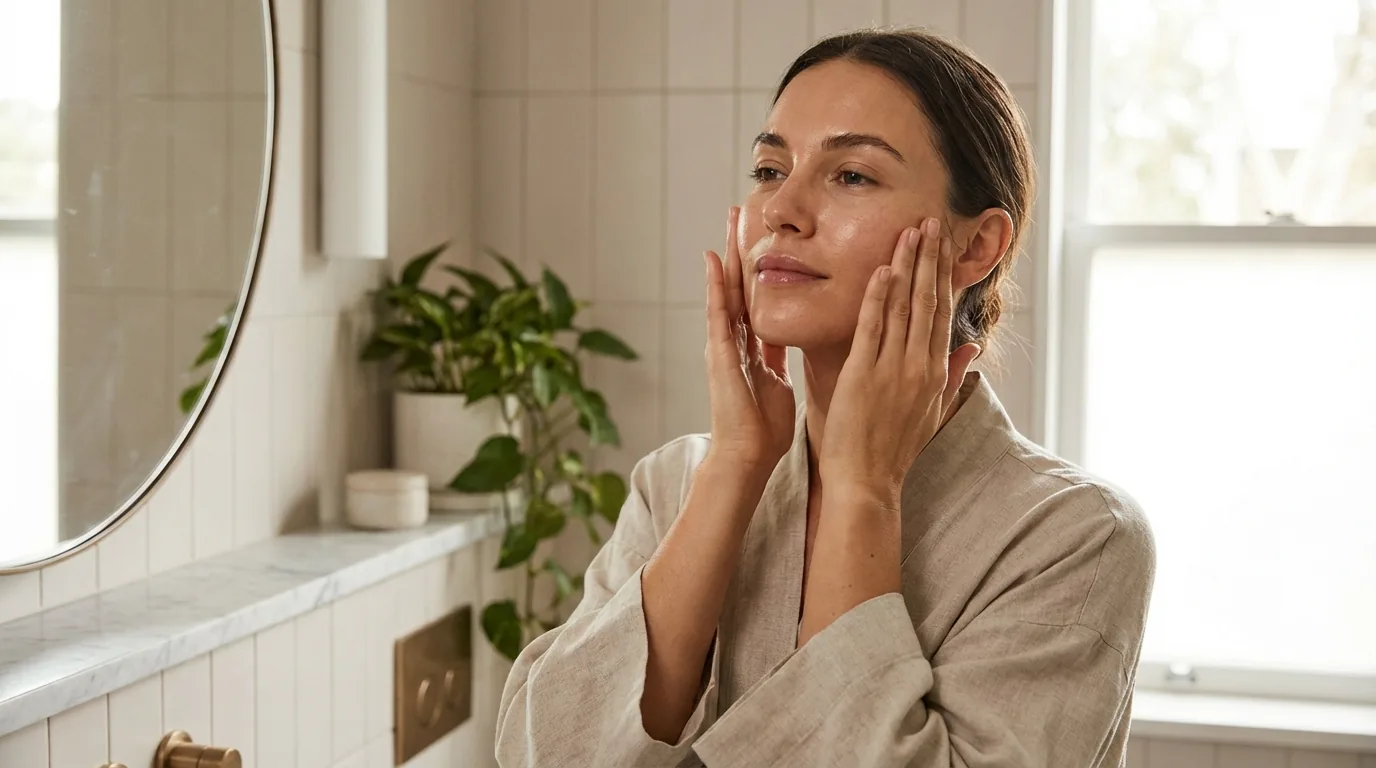
Effective depuffing massage follows the lymphatic drainage pathways. Begin by gently massaging the sides of the neck with downward strokes — this opens the drainage pathway that facial lymph will follow. Then work from the center of the face outward and downward: forehead center to temples, cheek center to ears, jawline center to the area below the ears.
Use light, rhythmic pressure — heavier pressure does not produce better drainage. The lymphatic vessels are superficial and respond to gentle stimulation. If you're pressing hard enough to move muscle or feel resistance from tissue, you're pressing too hard. Think of the pressure as slightly more than what you'd use to smooth a sheet of paper.
For morning depuffing specifically, focus on the under-eye and cheek area where fluid tends to accumulate overnight. Use ring fingers (they naturally apply less pressure) in gentle tapping motions from the inner corner of the eye outward, then sweeping from under the cheekbone toward the ear. Repeat 10-15 times per side. The entire routine can take as little as 3-5 minutes.
Realistic Expectations and Complementary Approaches
Approach facial massage with appropriate expectations: it is a pleasant, low-risk practice that can produce temporary visible depuffing and may offer modest cumulative skin benefits with consistent long-term use. It is not a substitute for evidence-based anti-aging treatments, and anyone marketing facial massage as a 'natural alternative to Botox' is making claims unsupported by scientific evidence.
For those looking to complement manual techniques with device-based treatments, red light therapy is one of the most researched non-invasive options for supporting collagen and reducing inflammation. While massage addresses surface-level fluid and circulation, light-based treatments work at the cellular level to support collagen synthesis and tissue repair.
The most valuable aspect of facial massage may be the mindfulness it encourages. Taking 5 minutes each morning to gently massage your face forces you to slow down, pay attention to how your skin feels, and create a moment of calm before the day begins. This stress-reduction benefit — supported by robust evidence linking chronic stress to accelerated skin aging — might be the most impactful aspect of the practice.
References
- Miyaji A, et al. "The effect of facial massage on the blood flow of the skin." Complementary Therapies in Medicine. 2018;41:271-275.
- Caberlotto E, et al. "Effects of a skin-massaging device on the ex-vivo expression of human dermis proteins." PLoS One. 2017;12(2):e0172640.
- Proksch E, et al. "The skin: an indispensable barrier." Experimental Dermatology. 2008;17(12):1063-1072.
Related Articles
Gua Sha: Separating the Real Benefits From the Hype
June 16, 2025

Facial Rollers: Jade vs Rose Quartz vs Metal and What the Research Says
July 14, 2025

Face Yoga: What the Science Says About Facial Exercises and Aging
July 28, 2025

How to Actually Repair Your Skin Barrier
December 3, 2020