
Key Takeaways
- •Basic spa facials primarily provide relaxation and temporary cosmetic improvement.
- •Medical-grade facials with active ingredients can produce measurable skin changes.
- •Extractions performed improperly can cause scarring, broken capillaries, and infection.
- •The real value of professional facials is professional skin assessment and customized treatment.
- •Frequency depends on skin type — most people benefit from monthly treatments.
- •Your daily skincare routine matters more than any single facial treatment.
The Anatomy of a Professional Facial
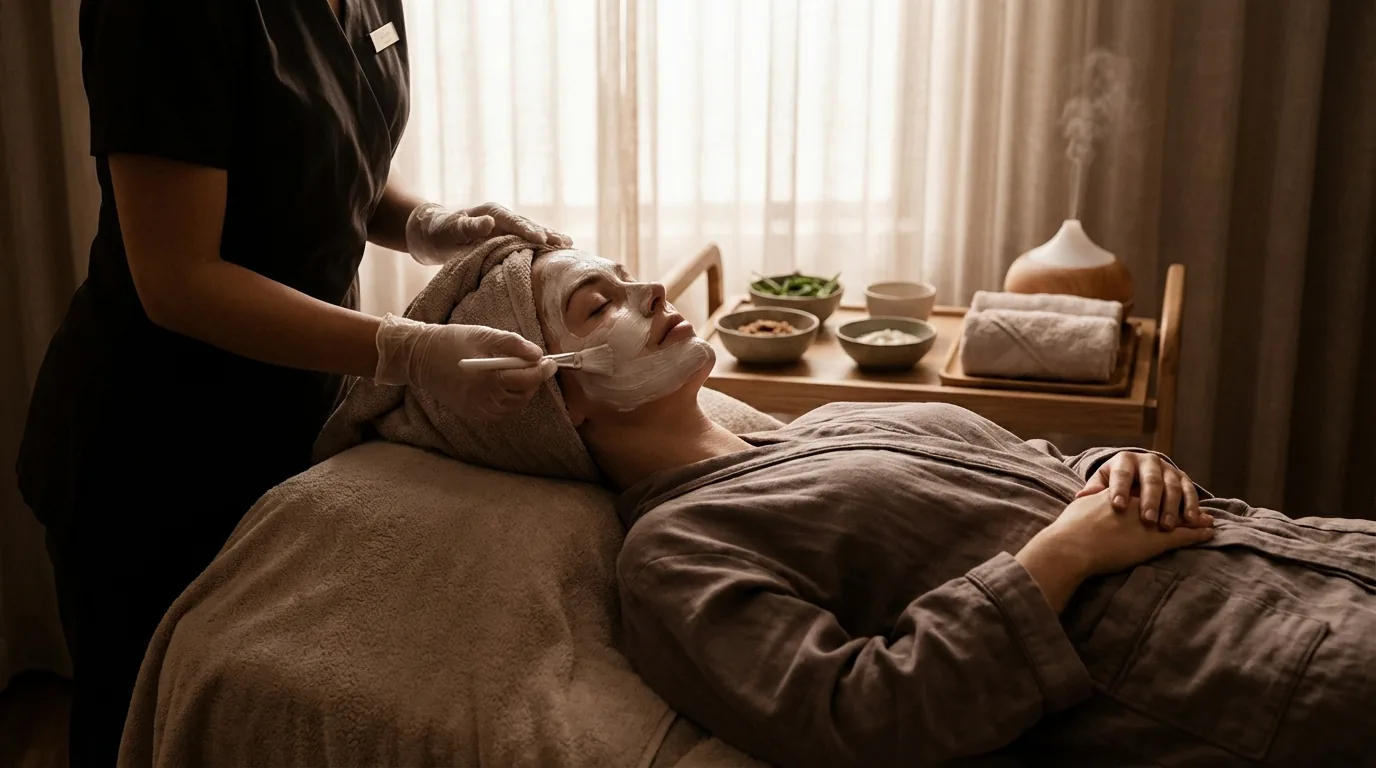
A standard professional facial follows a predictable sequence: cleansing, skin analysis, exfoliation, steam, extractions (optional), treatment mask, serum application, and moisturizer with SPF. Each step serves a specific purpose, though not all steps are equally valuable from a dermatological perspective. Understanding what each phase actually does to your skin helps you evaluate whether you're getting genuine clinical benefit or primarily paying for a pleasant sensory experience.
The cleansing phase removes surface makeup, sebum, and environmental debris. Professional cleansers are typically more effective than consumer versions — not because they contain magic ingredients, but because a trained aesthetician can perform a more thorough double cleanse. The skin analysis that follows is arguably the most valuable part of any facial: a trained eye evaluating your skin under magnification can identify concerns you've been missing and adjust the treatment protocol accordingly.
Exfoliation during a facial can be mechanical (microdermabrasion, enzyme scrubs), chemical (acid solutions), or a combination. The depth and type of exfoliation should be customized to your skin type and concerns. This is where the quality of the facial — and the training of the aesthetician — really matters. Generic one-size-fits-all exfoliation protocols miss the point entirely.
The Extraction Debate
Extractions — the manual removal of blackheads, whiteheads, and milia — are the most controversial aspect of professional facials. When performed correctly by a skilled aesthetician using proper technique and sterile instruments, extractions can clear congested pores more effectively than any topical product. When performed aggressively or on inappropriate lesions, they can cause bruising, scarring, broken capillaries, and infection.
Good extraction technique involves proper skin preparation (steam or a desincrusting solution to soften plugs), appropriate pressure applied at the correct angle, and knowing when to stop. Not every comedone will extract cleanly, and forcing a stubborn plug can push bacteria deeper into the follicle, causing an inflammatory lesion worse than the original blackhead.
If your aesthetician is leaving your skin bruised, bleeding, or significantly red for more than a few hours after extractions, the technique is too aggressive. Professional extractions should leave your skin clearer with only mild temporary redness. If you have inflammatory acne (papules and pustules), extractions are generally not recommended — these lesions are too deep and inflamed for manual removal.
Spa Facials vs Medical-Grade Facials
The facial landscape spans a wide spectrum from basic spa relaxation treatments to medical-grade procedures performed in dermatology offices. Spa facials typically use gentle, consumer-grade products and focus on the sensory experience — pleasant fragrances, relaxing massage, hydrating masks. There's nothing wrong with this, but the clinical benefit is largely limited to temporary hydration and the stress-reduction benefits of relaxation.
Medical-grade facials use professional-strength active ingredients — higher concentration retinoids, prescription-strength acids, growth factors, and medical-grade vitamin C. These facials can produce measurable changes in skin texture, pigmentation, and collagen density over a series of treatments. The products used in a medical facial at a dermatology office, such as professional vitamin C preparations, often perform at levels that consumer products simply cannot match.
The middle ground — medical spas (medspas) — offers treatments that fall somewhere between. Quality varies enormously. The best medspas employ trained aestheticians supervised by dermatologists and use evidence-based protocols. The worst are essentially day spas with fancier marketing. Ask about the qualifications of the person performing your treatment and the specific products being used.
Which Facial Types Deliver Results
HydraFacial treatments have gained popularity for good reason — they combine cleansing, exfoliation, extraction, and hydration in a single device-based protocol. The vacuum suction technology performs extractions more gently than manual techniques, and the simultaneous delivery of hydrating serums reduces the irritation associated with traditional extraction methods. Clinical studies show improvements in skin hydration, pore size, and fine lines.
Chemical peel facials — where the primary active step is a professional-strength acid peel — deliver the most measurable results for pigmentation, acne, and texture. These are essentially in-office chemical peels packaged within a facial protocol, and they benefit from the preparation and post-treatment steps that a full facial provides.
Oxygen facials, gold facials, vampire facials, and various celebrity-endorsed facial trends should be evaluated skeptically. Some (like PRP 'vampire' facials) have emerging evidence supporting their efficacy. Others (like oxygen infusion facials) have minimal scientific support despite impressive marketing. The rule of thumb: if it sounds too good to be true and the primary evidence is celebrity endorsements rather than peer-reviewed studies, proceed with healthy skepticism.
Making the Investment Worth It
A professional facial is worth the investment when it provides something you cannot replicate at home: professional skin assessment, proper extractions, professional-strength active ingredients, and customized treatment. If you're paying $150+ for someone to apply products you could buy at Sephora and give you a face massage, you're primarily paying for the experience rather than clinical results.
To maximize the value of professional facials, choose a provider who performs a thorough skin analysis at each visit and adjusts the treatment accordingly. Your facial protocol at age 25 should look different from your protocol at 45. Your summer facial should differ from your winter facial. A good aesthetician treats your skin as it presents that day, not following a rigid menu of services.
Post-facial skincare is important for maintaining results. After a professional facial, your skin is primed for absorption — it's an ideal time to apply high-quality serums and moisturizers. Products like Tatcha The Dewy Skin Cream or La Mer Moisturizing Cream can help seal in hydration after treatment, though these premium price points aren't necessary — a well-formulated ceramide moisturizer works just as well at a fraction of the cost.
How Often Should You Get a Facial
The standard recommendation of monthly facials aligns with the skin's natural turnover cycle of approximately 28 days. Monthly treatments allow your aesthetician to consistently manage congestion, monitor skin changes, and deliver cumulative benefits from active ingredients. For most people, this frequency provides the best balance of results and cost.
Some skin conditions may warrant more frequent initial treatments. Severe acne congestion might benefit from biweekly extraction sessions until the backlog of comedones is cleared. After a series of intensive treatments, maintenance facials every 6-8 weeks may be sufficient. Conversely, sensitive or reactive skin may do better with facials every 6 weeks to avoid overstimulation.
Regardless of how often you get professional facials, your daily at-home routine will always be the primary driver of your skin health. A $200 monthly facial cannot compensate for a poor daily routine. Think of professional facials as periodic deep cleaning and assessment — important and beneficial, but secondary to the daily fundamentals of cleansing, active ingredients, moisturizing, and sun protection.
References
- Meaike JD, et al. "Review of cosmeceutical ingredients for skin care." Clinics in Dermatology. 2019;37(2):161-167.
- Rao J, et al. "The biochemistry of facial treatments." Journal of Cosmetic Dermatology. 2017;16(4):421-428.
- Ganesan P, Choi DK. "Current application of phytocompound-based nanocosmeceuticals for beauty and skin therapy." International Journal of Nanomedicine. 2016;11:1987-2007.
Related Articles

Chemical Peels at Home vs. In-Office: An Honest Comparison
June 8, 2020

How to Actually Repair Your Skin Barrier
December 3, 2020
Gua Sha: Separating the Real Benefits From the Hype
June 16, 2025
Face Massage: Does It Actually Depuff or Just Feel Good
June 30, 2025